The One Who Quives
1897 -
The Minaret
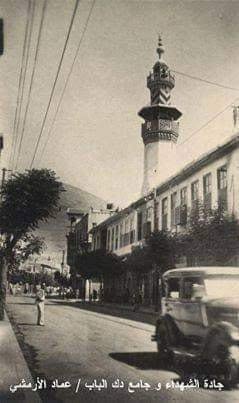
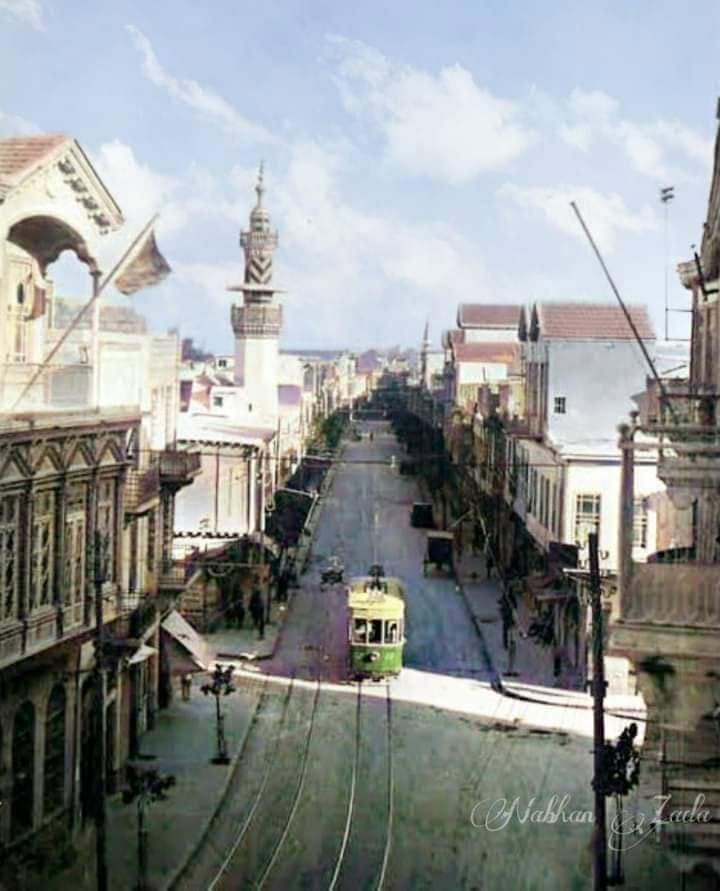
This is the "Dak Albab" mosque, named after my grandfather's grandfather, Youssef Dak Albab, who built it in 1897. This was nearly 100 years before I was born. It seemed like a footnote, but it would come to play a pivotal role in my life. Well, a version of it would.
You see, the old mosque burnt down in the great fire of 1965, and was rebuilt a couple of blocks away under the same name in 1994, exactly the year I was born.
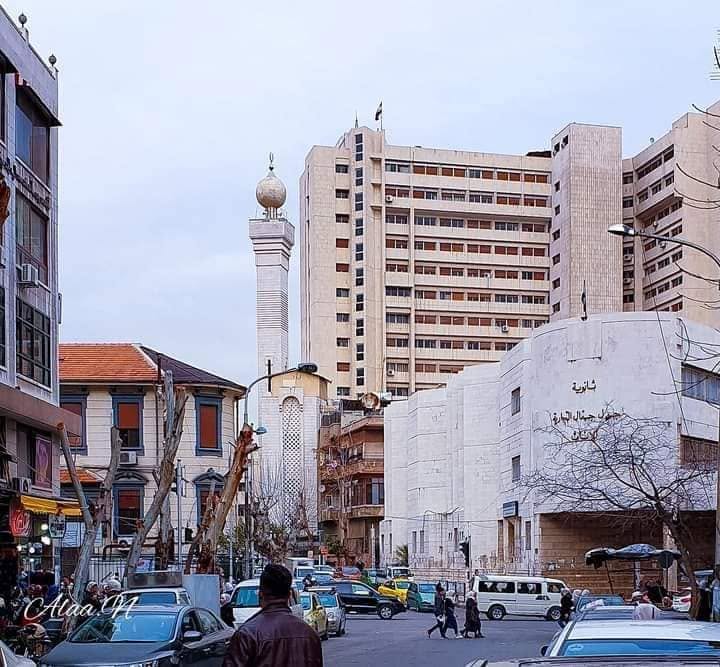
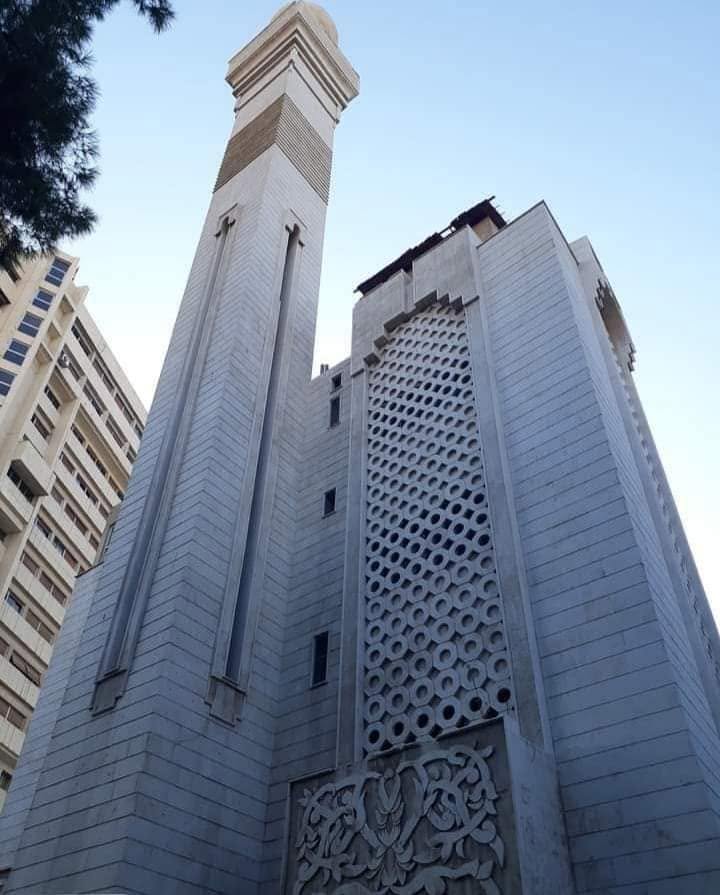
Strange coincidence. But coincidence aside, a landmark or monument bearing one's name turns out to be incredibly grounding -- maybe the closest thing a person gets to having superpowers. I'll tell you a couple of stories about how I used these superpowers.
A Name
I have a bit of an unusual name -- more of a sentence, really. Apparently I was named by my grandfather, a linguist, and its meaning is the subject of some dispute: Kinana is the Arabic word for a quiver, a leather tube in which archers carry their arrows. I had thought my name was simply a variation of that word, until a teacher disabused me of this notion.
To kin, the teacher said, is to cover, protect, or conceal something. It's also an imperative you'd bark at a noisy or fidgety child to demand they be quiet and still. This would make Kinan the one who quietly conceals: two things no one would ever suspect me of doing.
I did not like that at all. I'd much rather be the quiver; the one who quives, who makes others quiver. But Kinana, it turns out, is a feminine word, so it can only be a woman's name (pfft, gender!). I like my name too much for that. And since Arabic is my language - in other words, I own it - I use my super power and decree that Kinan means quiver, by fiat. This is my first superpower: the power to ordain.
Now comes the matter of my last name, which translates to "knock on the door." This would make me "Quiver who Knocks on the Door." Poetic, even a little Robin Hood-like! However, this name subjected me to a chorus of ridicule as a kid. The other kids (and sometimes teachers) would come up with all sorts of riffs. First, it was the innocent "knock on the window", "knock on the bathroom", or "knock on the kabab". By our teenage years it had escalated: "Dak Alzbab" (knock on the penises) was a big hit.
Kids that age make fun of everyone for everything. I've seen it wear other kids down, or rile them up. But why would I care if my name sounds funny when it's crested on literal monuments? This is the second superpower: the power to entrench.
So how did a name like this come to be? I uncovered (perhaps un-concealed?) two competing origin stories. The first says my great ancestor, first of our name, was a rich and charitable man who never locked his gate, so the poor who flocked to his house for his generosity never even had to knock on a door. The second says that same ancestor was so poor he spent his days going house to house knocking on doors, begging for help. My father, his father before him, and his father before him, assured everyone the second story was a libellous lie, started by enemies of my family, to slander our good name. Claude also confirmed this when I asked him.
However, if you find my father's and Claude's statements unconvincing, the mosque offers undeniable proof of my ancestor's wealth and charity. This is the third superpower: the power of verity.
By Definition
The gravest tests of this superpower came when I was much older. Two exiles, a tremulous PhD, and the loss of many loved ones made me lose sight of myself. But the mosque never let me forget: I come from some people and from some place. The ground beneath my feet is always solid. There is a place in the world where the stones and ghosts know my name. Bad men could keep me from going there, even for a visit, but they could not stop the stones and ghosts from waiting for me.
Two exiles meant two culture shocks. Assimilating to new, and in several cases, better values, twice. I've seen some lose themselves in this, torn between discordant parts of themselves until, at the extreme, they're at war with their own reflection. However, with my superpower, there is no conflict. I rule my roots and my culture with an iron fist, and the long line of Dak Albabs and their heritage are my hammer and anvils.
With them, I can alchemize and reconstitute: I could decree that this foreign land, from my second exile in New England, is not so foreign after all. It turns out that the surrealist paintings at MoMA are Syrian, and so are the clams and scup in the ocean. My ancestors would have loved to headbang at metal shows, had they had any back then. When I read Kant, I willed him, and the entire Enlightenment along with him, into my heritage and history. It helps that some of these threads are historical -- Syria was a Roman province once. But Japan never was, and yet, when I named my cat after Toshiro Mifune, I made him an honorary Syrian just the same.
When I saw people go to vote in a real election for the first time, I could shed collectivism and authoritarianism, and declare that Life, Liberty, and the Pursuit of Happiness were always wedded to the famed Arabic hospitality, loyalty, and poetic spirit. This is the greatest power of them all: to define.
I am the quiver, the one whose ancestors never locked their gates.
The Return
My first exile in Beirut was tantalizingly close to the mosque and its ghosts, no more than a two hour car ride. However, it was also a world apart. The moot closeness sent me teetering on the edge of insanity. It was there that I read Balthasar's Odyssey.
Its protagonist, Balthasar, was born in Byblos, Lebanon, to a family that had left Genoa hundreds of years earlier. Balthasar's quest takes him around the world, from Byblos all the way to London.
In the end, Balthasar returns to his ancestral Genoa and finds a tower named after his family. He knows, at last, that he's found his place to be. Everyone, he insists, should have a monument named after their family. I couldn't agree more.
Balthasar is always restless, and never at home, until he returns to his family's tower. Good thing this is merely fiction and has absolutely nothing (zilch, nada) to do with reality...
Sobriety
Balthasar manufactures his at-last-found peace. He comes to Genoa a stranger, knowing no one and no place, barely speaking the language, and unaware of his family's namesake tower. He first leaves Genoa to continue his journey, and only on his second return does his restlessness subside.
My story is similarly manufactured. The rebirthed mosque is not the same as the original. It is not even in the same location. I've been inside it no more than a handful of times. Why would I, a staunchly secular atheist, even care about a mosque? What if I had been born thirty years earlier, after the demise of the first mosque but before it was rebuilt? Surely, my ancestors did in fact lock their gates. Surely, everyone else also came from some place and from some people.
The nice thing about a story like this is that, even after you deconstruct it, the attitudes and security it ingrains remain. Find yourself a story like this. If you can't, create one.